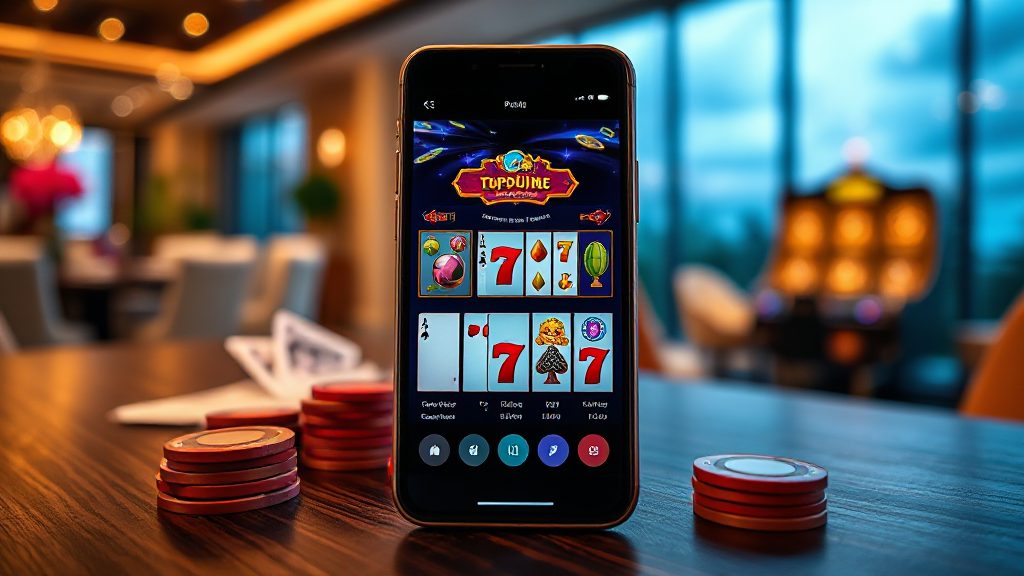
How Long It Takes to Confirm a Mobile Gaming App Meets Your Standards
Something shifted in the mobile gaming market over the past year. The bar for what counts as a usable real-cash app has moved, and it moved in a direction that favors players who check things before they install. Download sizes have grown, bonus terms have become more layered, and the difference between a platform that runs smoothly on a mid-range phone and one that stutters has become easier to spot — but only if you know which signals to look for. That is why the question worth asking is not which app is loudest, but how long it takes to verify that an app is actually worth your time. For most people, the honest answer is somewhere between twenty and forty minutes of structured checking. The no one fun problem — the feeling that a platform looks busy but delivers nothing engaging — is almost always a verification failure, not a luck failure.
This is a checklist written for someone who is already mid-task: you have a phone in hand, you have two or three candidate apps open in tabs, and you want a procedure rather than a lecture. I compared the alternatives the way an analyst would, by breaking each app into requirements, then walking through the same test sequence, then noting what deserves a second look before any money moves. If you follow the same order, you will usually know within half an hour whether an app belongs on your home screen or in the archive folder.
Requirements to Settle Before You Download Anything
Most disappointment in mobile gaming traces back to requirements that were never defined. People install first and define standards later, which means every flaw gets discovered in the worst possible order. Flip that. Before you touch a download button, write down four things: your device tier, your realistic session length, the game types you actually return to, and the maximum you are willing to deposit in a first week. These four constraints eliminate more apps than any review score ever will.
Device tier matters more than people admit. A real-cash gaming app that offers slots, card games, and live dealer tables is doing three very different jobs at once. Live tables stream video, slots animate constantly, and card games like Teen Patti need fast input response. If your phone is two or three generations old, you want an app that lets you disable animations or lower stream quality. If it does not offer that, you will feel the lag during exactly the moments that matter.
Session length is the second constraint. A player who opens an app for eight minutes on a commute needs fast load times and a clear path back to a favourite game. A player who sits down for an hour needs depth: tournaments, tables with real opponents, and a loyalty structure that rewards consistency. An app optimized for one profile often frustrates the other, and no amount of bonus money fixes a mismatch in session design.
Finally, define your game types honestly. If you only play one card game, you do not need a platform with two hundred slot titles — you need a platform where that card game has healthy tables at the hours you play. Requirements first, downloads second. Everything after this point is procedure.
The Twenty-Minute Verification Procedure
Here is the sequence I use, in order, with a rough time budget for each step. Total: about twenty minutes for a first pass, longer only if something looks promising.
Minutes 1–3: Source and download check. Confirm where the APK or app is actually coming from. A platform that publishes its own download page, states its version number, and explains its install steps is easier to trust than one that only circulates through forwarded links. Note the file size and whether the page mentions device requirements. If the download page is vague about what you are installing, that is a yellow flag before you have even opened the app.
Minutes 3–6: Install and first launch. Time how long the first launch takes and whether the app asks for permissions it does not need. A gaming app needs storage and network access. It does not need your contacts. Watch for the first impression: does the home screen show game categories immediately, or does it bury them under promotional banners? A clean lobby is a sign the product team thought about returning players, not just new ones.
Minutes 6–10: Account and login flow. Create an account or use the login path and pay attention to friction. Good apps remember your device, offer a clear password recovery route, and do not log you out mid-session. If login fails once, retry. If it fails twice, note it and keep going — but if it fails three times, stop. Login reliability is a proxy for overall engineering quality, and no bonus is worth fighting a broken door.
Minutes 10–16: Game sampling. Open one slot, one card game, and one live table. You are not evaluating whether you enjoy them yet. You are checking load time, frame stability, and whether the interface explains the rules without forcing you into a separate help page. This is also where you test the top one claim that every platform makes about itself: does the game selection feel curated, or does it feel like a dump of titles with no organization?
Minutes 16–20: Bonus and payment terms. Read the bonus conditions before claiming anything. Look for wagering requirements, expiry windows, and which games count toward clearing. A bonus with a short expiry and a high wagering multiplier is not a gift; it is a deadline. Check the deposit and withdrawal section for stated processing times. If the app does not state them anywhere, assume the slowest case.
At the twenty-minute mark you should have a verdict: keep testing, or uninstall. Most apps fail between minutes six and sixteen, and that is useful information, not wasted time.
What Separates a Polished Platform From a Busy One
There is a specific failure mode that experienced players recognize instantly: the app that looks full but feels empty. Dozens of thumbnails, rotating banners, a countdown timer — and yet when you actually sit down to play, the tables are thin, the slots are clones of each other, and the support channel does not answer. This is the difference between a busy platform and a polished one, and it shows up in three places.
The first is game variety with actual differentiation. A platform offering slots, card games, and live dealer rooms should let you move between them without relearning the interface each time. If the card game section and the slot section feel like two different apps stitched together, the product was assembled rather than designed. The top one game experience, in practice, is less about a single headline title and more about whether the whole library holds together under one account and one wallet.
The second is support responsiveness. A Telegram support channel is common in this market and genuinely useful, but only if responses arrive within a reasonable window. Send one test message during your verification — a simple question about withdrawal timing. The speed and clarity of the reply tells you more about the operator than any promotional page. If support answers in minutes with a specific answer, that is a strong signal. If it answers in hours with a copy-pasted paragraph, adjust your expectations accordingly.
The third is transparency around money. Polished platforms state deposit minimums, withdrawal minimums, processing windows, and any verification requirements in plain language, in one place. Busy platforms scatter this information across four pages and hope you give up. When you find a platform with a single, readable payments page, note it. That is the best game environment for a player who wants to spend time playing rather than hunting for terms.
Common Mistakes That Waste the First Hour
The most expensive mistake is claiming a bonus before reading its terms. Players see a large number, claim it, and only later discover the wagering requirement makes it effectively unusable within the expiry window. Rule: never claim anything during the verification pass. Verify first, claim second, and only after you have decided the platform is worth your time.
The second mistake is judging an app by its lobby instead of its tables. A beautiful home screen costs nothing to build. What costs money is server capacity for live tables, fair game logic, and support staff. Spend your evaluation time in the places that require real infrastructure, not the places that require good graphic design.
The third mistake is testing at the wrong hour. Live dealer tables and multiplayer card games have peak and off-peak periods. If you test at 6 a.m. and find empty tables, you have learned something about that hour, not about the platform. Test once at peak and once off-peak before drawing conclusions.
The fourth mistake is ignoring the update history. An app that receives regular updates is being maintained. An app whose last update was many months ago is being coasted. Check the version notes on the download page. Maintenance cadence is one of the few public signals of whether an operator is still investing in the product.
What to Recheck Before You Commit Real Money
Once an app has passed the twenty-minute pass, do a second, shorter check before your first deposit. This one takes about ten minutes and focuses entirely on money movement.
Recheck the withdrawal terms specifically, not the deposit terms. Deposits are always easy; withdrawals are where friction appears. Confirm the minimum withdrawal amount, the stated processing time, and whether any identity verification is required before the first payout. If the app requires verification, complete it early rather than at the moment you want to withdraw.
Recheck the bonus you intend to claim against your actual play style. If you mostly play live tables and the bonus only clears on slots, the bonus is not for you. If you play short sessions and the wagering window is seven days, calculate whether your normal volume can realistically clear it. A bonus you cannot clear is not value; it is a commitment you did not intend to make.
Recheck support one more time with a withdrawal-specific question. The answer you get now, when you have not yet deposited, is the same quality of answer you will get later, when you have. Finally, set your own limits before you deposit: a session budget, a weekly cap, and a rule for when you stop. The platform will not set these for you, and the 18+ nature of real-cash gaming means the responsibility sits with the player by design.
The Verdict Framework: Keep, Test Longer, or Uninstall
End every verification with one of three verdicts, and write down which one and why. Keep means the app passed source checks, login worked on the first or second attempt, games loaded cleanly across all three categories, support responded usefully, and payment terms were stated plainly. Test longer means the app showed promise but one category underperformed — usually live tables at off-peak hours or a thin card game section. Uninstall means any of the following: repeated login failures, unclear download source, no stated withdrawal terms, or support that never answered.
The value of this framework is that it turns a vague feeling into a decision. The “no one fun” sensation that players complain about is rarely about the games themselves. It is about installing something that was never checked against a standard, then blaming the platform for not exceeding a standard that was never set. Requirements first, procedure second, recheck third. Follow that order and the twenty to forty minutes you spend verifying will save you far more time than they cost — and the apps that survive the checklist are the ones that actually deserve the space on your phone.